sale1@cyndar.net    +86-18922155361
Cont

Have any Questions?

+86-18922155361

Oct 07, 2026

History Of Safety Light Curtains _CYNDAR Safety Light Curtains

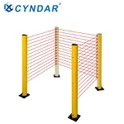
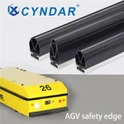
Before safety light curtains were invented, industrial equipment mainly adopted rigid protective structures such as metal guards, mechanical interlock doors and safety stoppers. Although reliable, these devices brought cumbersome operations. Workers had to disassemble or open protective guards every time for material loading, unloading or machine commissioning, greatly reducing production efficiency and complicating equipment maintenance. Factories struggled to balance safety and productivity for a long time. In the mid-last century, infrared photoelectric detection technology gradually matured, and the first generation of photoelectric safety devices came out. The early products were single-point photoelectric switches, which could only detect blockage at a single position with limited coverage. They were only suitable for simple entrance detection and could not form continuous protection zones, failing to meet the protection requirements for limb intrusion on machine tools and presses. With the rapid development of manufacturing automation, multi-beam infrared safety light curtains were officially launched. Working in pairs of transmitter and receiver, multiple infrared beams form a continuous invisible protective barrier. Once any beam is blocked, the machine receives a stop signal to realize large-area zone protection. Early light curtains were bulky with poor anti-interference performance. They were prone to false shutdown caused by workshop dust, strong light and electromagnetic interference, and their safety level was relatively low. Later, international machinery safety standards were continuously improved. The release of ISO 13849, IEC 61496 and other safety specifications promoted the iteration and upgrading of safety light curtains. Apart from the basic stop function, new functions including reset, muting, blanking and self-diagnosis were added. Hardware upgrades on circuits and optical lenses enhanced resistance to arc light, dust and electromagnetic interference. The product size was reduced while safety performance and stability were greatly improved, so they were widely used on high-risk equipment such as stamping machines, injection molding machines and robot workstations. In the intelligent manufacturing era, safety light curtains keep evolving toward miniaturization, intelligence and modularization. Relying on years of R&D experience in industrial sensors, CYNDAR safety light curtains optimize optical algorithms and safety circuits based on traditional light curtains. They support series connection of multiple units and zone grouped protection, suitable for retrofitting old and new automated equipment. Modern safety light curtains are no longer independent safety components, but part of the complete production line safety system. They are often used together with safety edges, safety mats and safety relays to build multi-layer human-machine protection solutions. From bulky single-point photoelectric switches to slim and intelligent multi-beam safety light curtains, the evolution of products reflects the transformation of industrial safety philosophy: changing from rigid physical isolation to invisible protection that balances safety and production flexibility. It maximizes the operation efficiency of automated production lines while protecting operators’ personal safety. Key points: - Background: metal rigid guards were used in early industry, limiting production efficiency ​ - Technical iteration: single-point photoelectric switch → first-generation multi-beam light curtain → intelligent safety light curtain ​ - Standard driving: ISO 13849 and IEC 61496 promoted safety level and reliability upgrade ​ - Modern trend: miniaturized, modular and networkable, forming a complete protection system with CYNDAR safety edges and safety mats ​ - Core philosophy shift: rigid physical isolation upgraded to flexible invisible safety protection

Send Inquiry

Product Categories