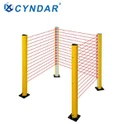
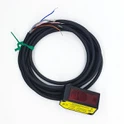
There are many different types of photoelectric sensors, but there are actually only four basic technologies: through-beam, reflective plate, diffuse reflection and background suppression.
1. Through-beam photoelectric sensor
advantage:
Suitable and accurate among the four types of photoelectric sensors
The sensing range of the four types of photoelectric sensors is suitable for long
Very high reliability
Disadvantages:
Must be installed in two positions of the application system: transmitter and receiver
Higher cost: transmitter and receiver must be purchased at the same time
2. Reflective plate photoelectric sensor
advantage:
The cost is lower than the through-beam photoelectric sensor
The accuracy is only lower than the through-beam type
Sensing range is larger than diffuse reflection type
High reliability
Disadvantages:
Must be installed in two positions of the application system: transmitter and reflector
The cost is slightly higher than diffuse reflection
Sensing range is smaller than through-beam
3. Diffuse reflection photoelectric sensor
advantage:
Install only on one side of the app
The cost is lower than the through-beam type and reflector type
Disadvantages:
Not as accurate as through-beam or reflector
May need more setup time
Four, background suppression photoelectric sensor
advantage:
Can be effective under reflective background
Disadvantages:
The cost is higher than the diffuse reflector, reflector type or through-beam type
Need to be suitable for long debugging setup time