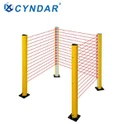
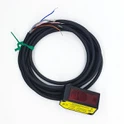
The wiring configuration of a safety edge sensor will depend on the type of sensor and the control system it is connected to. Generally, the sensor will have one or more sensor wires and one or more actuation wires. The sensor wires are connected to the control system's input module or safety relay. The actuation wires are connected to the control system's output module or safety relay. When the sensor detects an object, it sends a signal to the control system, which then activates the output module to stop or reverse the motion of the machinery. The wiring configuration should follow the manufacturer's recommended wiring diagram to ensure proper operation of the safety edge sensor.
We come across these safety edges more often in daily life than you might initially think. Consider, for example, a large roller door with a rubber bumper underneath. If this safety edge makes contact with an obstacle or person, the drive of the door is switched off immediately, before the door can cause trapping and injuries. Another example is the revolving door or tourniquet door at an airport. Cyndar safety edges often ensure that our arms or legs do not get stuck between the frame and the wing of the revolving door.
Different types of safety edges can be found in machine and acces safety. In addition to electrical systems that work according to the "normally open" principle, there are also opto-electronic safety edges. This type of safety edge requires a special signal processing module to process the signals. The Cyndar safety edges, however, work according to the very effectively and reliable in terms of safety technology with the 'normally closed' principle. This is a fail-safe method, which also does not require a separate safety module.