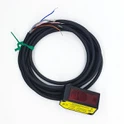
The internal frame is made of thermosetting plastic, molded to ensure dimensional accuracy. Its heat-resistant deformation temperature exceeds 120°C, making it capable of withstanding the heat transfer caused by long-term coil operation.

Among the elastic components, the return spring and contact spring are made of age-hardened beryllium bronze (such as QBe2). After precision stamping and heat treatment, the elastic limit is significantly increased, maintaining stable spring force output after tens of thousands of on-off cycles. Compared to phosphor bronze, it has a longer fatigue life and is particularly suitable for frequent time-delay control scenarios, ensuring consistent contact pressure.
As an electrical control component, the SRTD22-99 time delay relay's core function is to achieve "delayed triggering" of switching actions in a circuit through a set delay time, thereby coordinating the operating sequences of different circuits or devices and ensuring safe and efficient system operation.
Specific functions include timing control and coordinating device operations: In circuits with multiple devices connected, the order in which each component starts or stops is often strictly required. For example, in an industrial production line, if a conveyor belt needs to start feeding material only after the motor is fully started, a delay can be set using the SRTD22-99. After the motor is started (the delay ends), the conveyor belt's start circuit is triggered to avoid excessive equipment load caused by synchronous startup. In a lighting system, corridor lights need to be turned off after a delay after people leave. After receiving a trigger signal (such as an infrared sensor), the relay can delay disconnecting the lighting circuit, achieving the energy-saving effect of "lights turning off slowly when people leave."