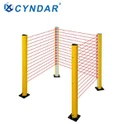
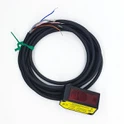
The photoelectric sensor is a device that converts light signals into electrical signals, and its working principle is based on the photoelectric effect. The photoelectric effect means that when light irradiates certain substances, the electrons of the substance absorb the energy of the photon, and the corresponding electric effect occurs. According to the different phenomena of the photoelectric effect, the photoelectric effect can be divided into three categories: external photoelectric effect, internal photoelectric effect and photovoltaic effect.
The photoelectric sensor is controlled by converting changes in light intensity into changes in electrical signals. First, the transmitter aims at the target and emits the light beam uninterruptedly; secondly, the receiver receives the light beam emitted by the transmitter and converts it into electrical signals; finally, the detection circuit detects the electrical signal output by the receiver and only retains the valid signal.
Photoelectric sensor is a sensor with photoelectric device as the conversion element. It can be used to detect non-electricity that directly causes light quantity changes, such as light intensity, illuminance, radiation temperature measurement, gas composition analysis, etc.; it can also be used to detect other non-electricity that can be converted into light quantity changes. Electricity, such as part diameter, surface roughness, strain, displacement, vibration, speed, acceleration, and identification of object shape and working status.
In recent years, it has been widely used in laser weapons and automatic meter reading systems, smoke turbidity detectors, bar code scanners, product counters, photoelectric smoke alarms, measuring speed, and the application of photocells in photoelectric detection and automatic control.