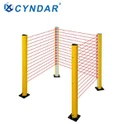
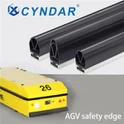
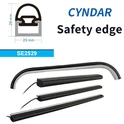
Safety edges are protective devices on the edges of equipment, reducing collision damage through material cushioning properties or trigger mechanisms. Materials must meet protection, durability, and environmental compatibility requirements:

I. Core Materials
Elastomers: Rubber (excellent elasticity and wear resistance, suitable for machine tools, etc.), silicone (high and low temperature resistance and hygienic properties, suitable for food and medical equipment), TPE/TPU (injection moldable, with adjustable hardness, used in automated production lines) provide cushioning.
Metal: Internal thin steel plates and aluminum alloy strips enhance stability and serve as trigger mechanisms to ensure rapid shutdown.
II. Supporting Materials
Fabric: Nylon and polyester fabrics (wear-resistant and tear-resistant, protecting internal materials, used in amusement rides); fiberglass fabric (high-temperature resistant, used in combination with silicone for high-temperature equipment).
Securing Materials: High-strength double-sided tape or clips or screws ensure secure installation of the safety edge.


3. Requirements for special scenarios
Food grade: Use silicone/TPE that complies with FDA and LFGB;
High and low temperature: Low temperature resistant rubber or heat resistant silicone, fluororubber;
Explosion-proof: Conductive or antistatic elastomer.
The selection needs to balance protection and durability in combination with the scenario, taking into account equipment compatibility.