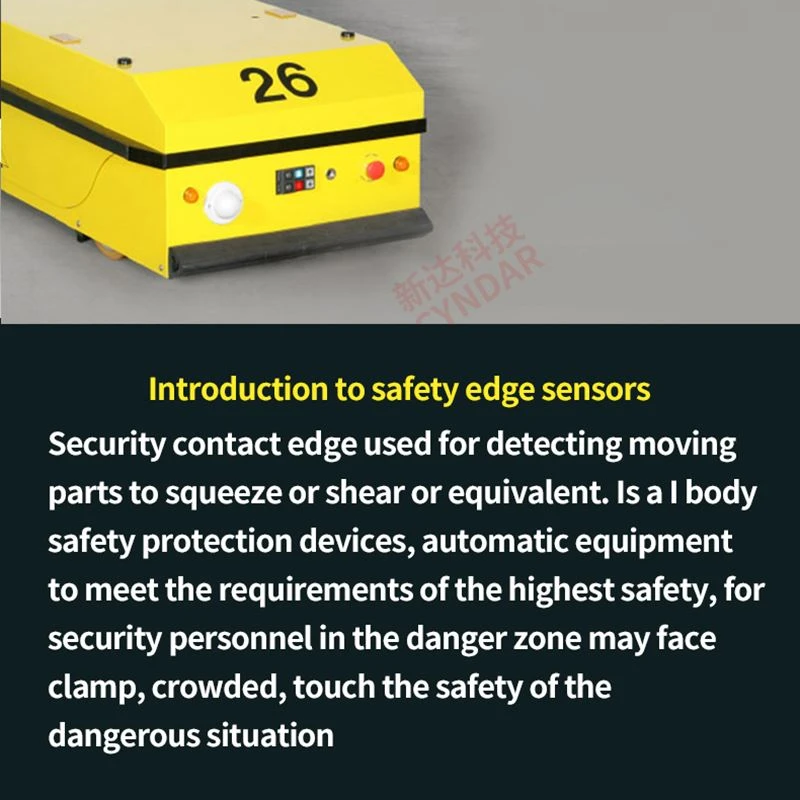
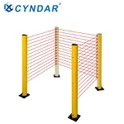
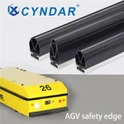
Safety edge sensors play an important role in our lives, and the application of safety edge sensors in our lives is also very extensive. It can be seen in various production workshops. Although the safe touch is around us, we rarely find it under normal circumstances, but it really protects our safety. Let's analyze the working principle of our safe edge contact below. The safety edge and the safety buffer are flexible and bendable ribbons, which can be fixed on the edges of moving parts that are in danger of squeezing and shearing, such as machine tool tables and electric doors.

1. When the moving parts equipped with safety edges or safety buffers hit the operator (or the operator hits the moving parts), these flexible safety edges will be compressed and send a signal to the power source to stop the movement of these parts.
2. The safety edge or safety buffer can be classified as a "belt" device. The safety edge or safety bumper does not restrict entry but merely "feels" it. The safety side and the safety buffer completely rely on their sense and switching capabilities to provide safety protection, so reliable control of the control circuit of the safety side or the safety buffer is very important. Usually safety edges or safety buffers are only used on machines where the moving parts can be stopped immediately after the power is removed.
3. The safety side or safety buffer and the controller together form a flexible and universal emergency stop system. The machine operator or installer must be able to stop the dragging device easily and conveniently.
4. A complete safety edge includes an aluminum rail-safety contact, and safety contact belt. The special shape of the safety edge (rubber side) can protect the safety contact belt from damage and allow the impact angle of the safety edge to exceed 90 degrees.
5. The working principle of the safety buffer is similar to that of the safety side, but there are some differences in the structure. It has an extra foam rubber accessory covered with polyurethane, which is used to protect other objects in contact with it.