A 400-ton press line, three shifts, twelve operators, and one die set that took six weeks to prove out. The sensor reading ram position quit on a Tuesday morning. The line ran again on Friday afternoon. Nothing else on that machine was broken - not the clutch, not the hydraulics, not the control.
That gap is not really a maintenance story. It is what the buying conversation has turned into. In 2021 the questions were resolution, response time, detection capability, which standard number sat on the certificate. In 2026 they are how many weeks, who has stock, what replaces it, and will that part number still exist in three years. A sensor moved from selection item to maintenance item. Procurement did not make that call. Downtime did.
Three days, itemised
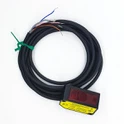
The device was a mid-range photoelectric unit off a European line, nothing exotic. Quoted lead time: six weeks. Stock at the local distributor: none. Two other channels quoted four to five weeks. The plant borrowed a spare from a sister site two provinces away, courier on Wednesday, back in production on the night shift Thursday.
Add it up. Nine shifts lost, roughly 3,000 strokes a shift on that die, so somewhere near 27,000 parts behind, and a week of overtime at the customer end to claw it back. Plus one air freight bill nobody had budgeted. The replacement unit cost a few hundred euros. The three days cost more than every sensor on that machine put together.
What fixed it was not a better sensor. It was a stocking decision: one spare on the shelf for every device that can stop the line on its own, and a second source that had actually been bench-tested and run in a cell, not just added to an approved vendor list.
Where the local alternative actually stands
Cheap sensors have always existed. What changed is that a slice of the local supply now arrives with the paperwork and the field hours behind it - CE marking that survives an audit, a type-examination report for the safety function, EMC results, and a few years of running in real plants.
The threshold is not the certificate. The threshold is the second winter. A unit that comes through a humid foundry summer and a cold January with castings dropped beside it and coolant mist on the housing has proved something a datasheet cannot. Most of the failures we hear about are not accuracy failures. They are housings, seals, brackets, connectors.
Two things still bite. Documentation in the buyer's language is often thin, which turns into a real problem when the machine ships with a technical file. And the mechanical envelope - bracket pattern, cable exit, connector orientation - differs enough between brands that a swap is rarely drop-in. Someone ends up drilling, or making an adapter.
Spares, and the line item nobody budgets
Customers now ask a question that would have sounded odd in 2021: will I still be able to buy this in three years? Obsolescence notices arrive with eighteen months on them, sometimes less, and a machine built around a discontinued housing means redesigning the guard, not swapping a part.
Then there is the swap itself. Forty minutes if the bracket lines up. Half a shift if it does not, plus the re-check afterwards, because nobody signs off a guard they have just moved without running the stop-time test again. The part is a few hundred. The half shift is the money.
So machine builders have started scoring suppliers on delivery risk instead of parameter depth. Two sources, one of them local, a written cross-reference, and a spare on the shelf are worth more to them than a better resolution figure.
The catalogue still matters. The shelf matters more.
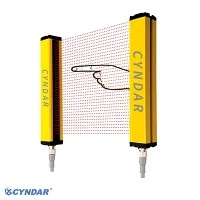
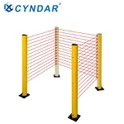
CYNDAR builds light curtains, safety mats and safety relays for machine builders who have to keep a line running long after the warranty ends.