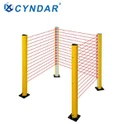
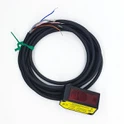
Recently, as a protective device designed specifically to protect equipment and personnel safety, the core functions and roles of safety relays have attracted attention.
Safety relays perform well in protecting equipment and circuits. When abnormalities such as equipment overload, short circuit, leakage, and overheating are detected, it can quickly cut off the circuit through electromagnetic principles or thermistors to prevent equipment damage; in the case of short circuit or leakage, it can also quickly cut off the current and limit the fault current amplitude to avoid causing a larger range of electrical fires or chain damage to equipment.
In terms of ensuring personnel safety, safety relays monitor the residual current in the circuit in real time, cut off the power supply in time, and prevent electric shock accidents; after equipment failure or emergency stop of operation, ensure that the equipment will not restart accidentally to avoid sudden mechanical operation and cause personal injury.
Its safety redundancy design is also a highlight. Using dual-channel signal verification, two independent channel signals must be normal at the same time to work. If any channel is abnormal, the output will stop. The forced guide structure ensures that the contacts will not be closed at the same time to avoid false operation; the internal circuit can detect its own faults, and the system can only restart after manual reset to confirm safety, which improves reliability.
In addition, CYNDAR safety relays have auxiliary functions and extended applications. It can send abnormal status to the control system, support sound and light alarms or link with the monitoring platform for timely processing; some models have fault log recording function, which provides a basis for subsequent equipment maintenance and optimization; and are widely used in nuclear power, chemical industry, automobile manufacturing, machine tools and other scenarios to protect operating environments of different danger levels.
Compared with traditional relays, safety relays solve the safety hazards of ordinary relays when contacts stick or single channels fail through designs such as forced guided contacts and redundant circuits, and are more suitable for industrial scenarios with high safety requirements.
In summary, the safety relay (SRC106) takes into account both equipment protection and personal safety when the equipment is abnormal through multiple protection mechanisms, and is an indispensable safety component in industrial automation, power systems and critical infrastructure.
However, the specific selection needs to be comprehensively considered according to the voltage level, contact type, anti-interference ability and other parameters of the application scenario.