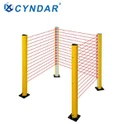
The formation of blind spots is usually related to factors such as equipment structure, installation method, and touch edge performance, including:

Irrational installation position: For example, the safety touch edge is only installed on the horizontal edge of the equipment, while the vertical corners and the gaps under the equipment are not covered, resulting in failure to trigger when people enter from below or corners.
Equipment structure obstruction: The protrusions and components of the equipment itself (such as robot arms and mechanical brackets) may block the detection range of the touch edge, forming a physical blind spot.
Touch edge performance limitations: Some touch edges have detection "dead corners", such as areas with reduced sensitivity at both ends of the touch edge and areas that do not respond enough to extremely light touches (such as children or flexible objects).


Scene adaptation issues: In complex working conditions (such as high and low temperature, dust, and humid environments), the touch edge may fail locally due to aging and wear, forming a hidden blind spot.
Blind spots caused by dynamic movement: When the equipment is running (such as robot rotation and conveyor belt movement), the relative position of the touch edge may change with the movement of the equipment, and the original coverage area may be temporarily vacant.