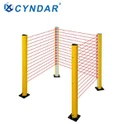
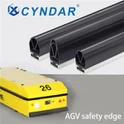
Blind spots in different scenarios behave differently. The following are common cases:
Industrial robot workstation:

Safety edges are usually installed on the vertical edge of the workstation fence, but the "lower area" where the robot arm moves (such as the gap from the ground to the bottom of the fence) may form a blind spot - when a person squats, the body may enter the workstation through the gap without touching the fence edge, causing the robot to continue running and cause a collision.
Elevator door:
The safety edge of the elevator door mainly detects horizontal contact, but the vertical gap between the door body and the bottom of the car (especially old elevators) may form a blind spot. When a child's fingers or small objects are inserted, the edge cannot detect and may be squeezed by the door body.
Logistics conveyor belt:
If the safety edges on both sides of the conveyor belt only cover the sides, and the connection between the conveyor belt and the ground (such as the bottom gap) is not protected, the feet of the person may be inserted into the gap, and the edge cannot trigger the shutdown, resulting in pinching.
CNC machine tools:

If the safety edge of the machine tool operating panel is installed on the outside of the panel, a blind spot may be formed at the angle between the panel and the machine tool body. When the operator bends over to adjust the parameters, the side of the body may enter the angle area without touching the edge, and be injured by the moving tool or workpiece.