Safety Edges in Industrial Machinery: Practical Application and Installation Tips
I've been selling industrial safety products for years now, and honestly, safety edges are one of those things that everyone uses but not everyone installs correctly. They're simple passive safety devices, but when they're done right, they can prevent some really serious injuries.
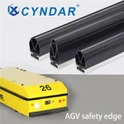
You'll find them on pretty much every piece of automated equipment these days. Machine tools, industrial robots, conveyor belts, scissor lifts-anywhere there's a moving edge that could pinch or crush someone, you need a safety edge. The idea is straightforward: when the edge gets pressed with between 5 and 70 Newtons of force, the internal contacts break, and the machine shuts down immediately. It cuts the power right away, so there's no delay that could cause an accident.
Now, the biggest mistake I see people make is rushing through the installation. If you don't do it properly, the safety edge won't work when you need it most, and that's a huge risk. First off, you have to cover every single dangerous edge. I can't stress this enough. Check the slides on your machine tools, both sides of every conveyor belt, and the entire perimeter of your lifting platforms. Even a tiny unprotected spot is an accident waiting to happen. I've seen too many incidents where someone missed just one corner, and that's exactly where someone got hurt.
Next, make sure they're fixed on securely. Use the brackets and screws that come with the safety edge, don't just grab whatever you have lying around in the toolbox. Machines vibrate a lot when they're running, and loose screws will work themselves out over time. At the same time, don't pull the safety edge too tight. Leave a little bit of slack so it can expand and contract with temperature changes. If it's stretched too far, it won't compress properly when it's hit, or it might even tear.
Wiring is another common problem. Always connect the safety edge directly to the machine's emergency stop circuit, not a regular control circuit. If you wire it wrong, it might just slow the machine down instead of stopping it completely. And make sure all the connections are properly insulated to prevent shorts. Once you're done wiring, test the whole thing. Press every inch of the safety edge, not just the middle. If any spot doesn't trigger an immediate stop, go back and check your work.
And don't forget about maintenance. A lot of people install them and then never look at them again. But safety edges are made of rubber, so they wear out over time, especially in oily or hot factories. Check them every month for cuts, tears, or cracks. If you see any damage, replace it right away. Don't try to patch it up with tape-that's just asking for trouble.
Speaking of safety edges, I should mention that we at CYNDAR have dozens of different models available. Whatever kind of machine you have, whatever your working conditions are, we've got a safety edge that will fit. And honestly, in the international market right now, it's really hard to beat our combination of price and quality. We work hard to make sure our products are reliable and affordable, so our customers can keep their workers safe without breaking the bank.
At the end of the day, safety is all about the little details. Take the time to install your safety edges correctly, check them regularly, and you'll avoid a lot of problems down the line. If you have any questions about which safety edge is right for your equipment, just give us a call. We're always happy to help.